HAPS Vs Satellites: Which One Wins For Stratospheric Coverage?
1. The Questions Itself reveals an underlying shift in the way we Consider Coverage
For the majority of the last three decades discussion concerning reaching remote or unserviced regions from above was explained as a choice between ground infrastructure and satellites. The appearance of viable high-altitude platform stations has brought an alternative that doesn’t have the same logical place in either This is precisely what makes this comparison fascinating. HAPS don’t want to substitute satellites in all ways. They’re aiming to compete for certain use situations where the physics of operating at 20km instead of 35,000 or 500 kilometers results in significantly superior outcomes. Finding out where that advantage is genuine and what it doesn’t will be the main focus of this game.
2. Latency Is Where HAPS Win In a Straight Line
The duration of signal travel is determined by distance, and distance is where stratospheric stations have an undisputed structural advantage over other orbital systems. A geostationary satellite is located approximately 35,786 kilometers above the equator, producing round-trip latency of around 600 milliseconds. This can be utilized for voice calls albeit with noticeable delay, however it is not ideal for real-time applications. Low Earth orbit satellites have greatly improved this situation functioning at 550 to 1,200 kilometers, with latency between the 20 to 40 millisecond range. A HAPS car at 20 kilometers can deliver latency levels comparable to terrestrial networks. In the case of applications that require responsiveness — industrial control systems financial transactions, emergency communications direct-to-cell connectivity that difference is not merely marginal.
3. Satellites Gain Global Coverage, and That Matters
The current stratospheric platforms can be used to cover the entire world. Only one HAPS vehicle is able to cover a broader regional footprint that is enormous in terrestrial terms, but only a finite area. To provide global coverage, you’ll need networks of platforms spread across the globe and each with its own set of operations along with energy systems and station monitoring. Satellite constellations in particular, particularly huge LEO networks, can cover the planet with overlapping ranges of cover that stratospheric facilities cannot replicate with current vehicle numbers. For applications that require truly global coverage — maritime tracking global messaging, polar coverage, satellites are the only real option on size.
4. Resolution and Persistence Favour The HAPS Program for Earth Observation
If the mission requires monitoring a specific region continuously -following methane emissions through an industrial corridor, monitoring the spread of wildfires in real-time, or monitoring oil pollution spreading from an offshore incident — the continuous close-proximity characteristics of a stratospheric system produces quality data that satellites are unable to be able to match. Satellites operating in low Earth orbit travels over any one of the points on the surface for minutes at time and has revisit intervals measured in hours or even days based on the size of the constellation. A HAPS vehicle that remains above the same area for weeks provides continuous observation with sensor proximity that supports superior spatial resolution. To be used for stratospheric earth observation, this kind of persistence is often more valuable than the global reach.
5. Payload Flexibility Is a HAPS Advantage Satellites aren’t readily match
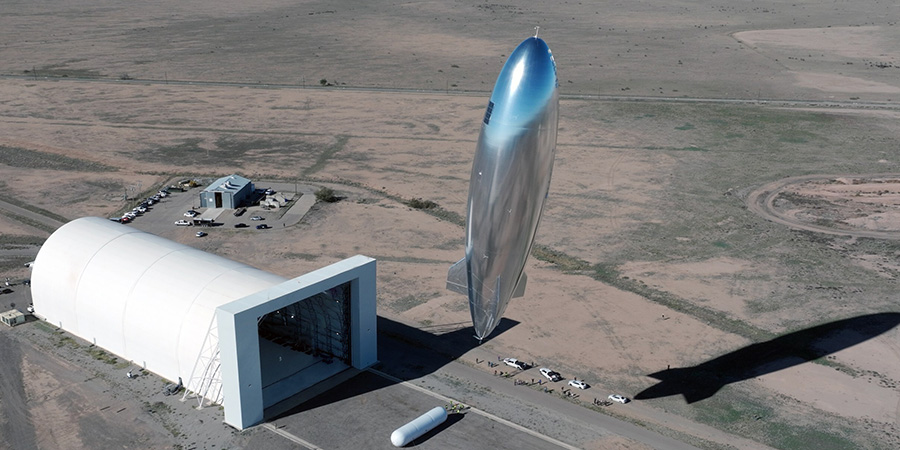
When a satellite is in orbit, its payload becomes fixed. Making changes to sensors, swapping hardware, or adding new instruments require the launch of completely new spacecraft. A stratospheric satellite returns to earth between missions and its payload can be reconfigured, upgraded and completely redesigned as mission requirements change or advances in technology become available. Sceye’s airship’s design is specially adapted to the capacity of a payload that is meaningful, allowing different combinations of antennas for telecommunications, carbon dioxide sensors and warning systems for disasters on the same vehicle — a flexibility that will require several satellites to replicate each with a distinct costs for the launch as well as an orbital slot.
6. The Cost Structure is fundamentally different
Launching a satellite requires rocket costs such as insurance, ground segment development and the acceptance that hardware failures on orbit are a permanent write-off. Stratospheric platforms work more like aircrafts — they can be recovered, examined and repaired before being redeployed. This doesn’t mean that they are cheaper than satellites based on a basis of coverage-area, but it changes the risk profile and the cost of upgrades significantly. For those who are testing new services or entering new markets, being able to retrieve and modify the platform instead taking orbital devices as sunk cost could be an important operational advantage especially in the beginning commercial phase the HAPS market is in.
7. HAPS is a 5G Backhaul in places where satellites cannot effectively
The telecommunications framework that’s enabled by a high-altitude platform station operating as a HIBS — effectively an actual cell tower in the sky was designed to connect with modern mobile networking standards that satellite historically isn’t. Beamforming with a stratospheric telecom antenna allows dynamic signal allocation across a broad coverage area that supports 5G backhaul to devices on the ground and direct-to-device connectivity simultaneously. Satellite systems are increasingly capable in this regard, but the physical physics of operating closer to ground gives stratospheric technology an advantage in signal strength, frequency reuse and compatibility to spectrum allocations designed for terrestrial networks.
8. Operational Risk and Weather Differ Significantly Between the Two
Satellites, after being in stable orbit, remain largely unaffected to weather conditions in the terrestrial. A HAPS vehicle operating in the stratosphere will face a more complex operational environment which includes stratospheric wind patterns including temperature gradients and an engineering problem of surviving the night without losing station. The diurnal cycle, which is the regularity of solar energy availability and the draw of power during the night is a design limitation each solar-powered HAPS is required to solve. Modern advances in lithium-sulfur battery capacity and efficiency of solar cells are closing the gap, but this is the real operational problem which satellite operators aren’t required to have to contend with in the same sense.
9. The truth is that They perform different tasks.
A comparison of satellites versus HAPS as a contest that will decide who wins is a misreading of how non-terrestrial infrastructure is likely to grow. The more accurate picture is a layered model with satellites handling global reach and applications in which coverage universality tops all other aspects and stratospheric platforms help with regional persistence tasks -the connectivity of geographically challenging terrain, continuous environmental monitoring for disaster management, as well as five-G deployment in areas where satellite rollouts on land are not economically feasible. The Sceye’s design reflects what it says: a mobile platform was designed to accomplish things in a specific region, in long-term timeframes, using sensors and a communications payload that satellites aren’t able to duplicate at this height and close proximity.
10. The Competition will eventually become more intense. Both Technologies
There’s an argument that the rise of reliable HAPS programmes has helped accelerate technological innovation through satellites, and the reverse is also true. LEO constellation operators have pushed both coverage and latency ways that are raising the bar HAPS have to meet the requirements of competing. HAPS developers have demonstrated a long-lasting regional monitoring capabilities that has prompted satellite operators reconsider revision frequency, sensor quality and even resolution. For example, the Sceye and SoftBank collaboration to target Japan’s entire HAPS network, as well as pre-commercial services planned for 2026 is one of the clearest indications that the stratospheric platforms have moved from being a theoretical competition to an active participant in influencing how the non-terrestrial network and observation market develops. Both technologies will be better for the demands. See the top sceye earth observation for website advice including what’s the haps, aerospace companies in new mexico, Real-time methane monitoring, Cell tower in the sky, Sceye Inc, space- high altitude balloon stratospheric balloon haps, Diurnal flight explained, sceye haps softbank partnership, sceye services, softbank investment in sceye and more.

Sceye’s Solar-Powered Airships Provide 5g In Remote Regions
1. The Connectivity Gap Is a Infrastructure Economics problem first.
Roughly 2.6 billion people still do not have any internet access at all, and the reason for that is often the lack of technological options. It’s a lack of financial justification to install that technology in locations where population density is low and terrain is not that difficult or the political stability is too uncertain to allow an appropriate return on infrastructure investment. Building mobile towers across mountains, archipelagos, deserted interior regions or isolated island chains cost real money against revenue projections that aren’t in support of the idea. This is the reason this connectivity gap has remained with no end in sight and despite years of genuine goodwill — the issue isn’t about awareness or intension but the economics of terrestrial deployment in locations that do not fit into the standard infrastructure strategy.
2. Solar-powered Airships Revise the Deployment Economy
An stratospheric aership functioning as an antenna for cell phones up in the skies alters nature of the cost for connectivity to remote sites in a way that is significant on a practical level. A single rooftop at 20 kms in height covers an area that would require many terrestrial towers to duplicate, and without the engineering and land acquisition infrastructure, and continual maintenance required by ground-based deployments. Solar-powered technology removes fuel logistics from the equation entirely — the platform generates its own power through sunlight and is stored in high-density batteries for operation over night, and will continue to function without transportation chains that extend into distant regions. In the regions where the primary barrier connecting is the costs and complexity of physical infrastructure the solar-powered solution is a totally new approach.
3. The 5G Compatibility Challenge Is More important than It Sound.
A satellite-based broadband service is only practical commercially that it is connected to equipment that people actually own. Early satellite internet systems required advanced terminals that were expensive heavy, bulky, and unsuitable for widespread market adoption. The development of HIBS technology that is High-Altitude Intermediation Base Station standards — transforms this by making stratospheric platforms compatible with the standard 4G and 5-G protocols which standard smartphones have already adopted. A Sceye airship that acts as a telecommunications antenna can, in principle use standard mobile devices without any additional hardware required on users’ end. The compatibility with existing software ecosystems for devices is the primary difference between a connectivity solution that can be used by everyone in the zone of coverage and one that is limited to those who can spend the money for specialized equipment.
4. Beamforming Transforms a Large Footprint into a streamlined, targeted coverage
The raw coverage footprint of stratospheric platforms is massive, but raw coverage and useful capacity are not the same thing. Broadcasting an even signal across a 300-kilometre diameter footprint uses up the majority of spectrum on uninhabited terrain, open water, or areas in which there aren’t any active users. Beamforming technology permits the stratospheric telecom signal to concentrate energy of the signal the places where demand is actually presentlike a community of fishermen on some part of the coastline and an agricultural zone in another, and a town with a major disaster happening in third. This sophisticated signal management improves the efficiency of spectral energy, which directly impacts the capacity available to actual users rather than the theoretical maximum area of coverage that the platform could cover If it broadcasts indiscriminately.
5G backhaul applications benefit from the same principle -direct high-capacity links to infrastructure nodes on the ground that require them, rather than spreading capacity over empty areas.
5. Sceye’s Airship design maximizes the payload and is suitable for Telecoms Hardware
The telecommunications components on a stratospheric platform — antenna arrays signals processing units beamforming equipment and power management systemshave real weight and volume. The vehicle that spends the vast majority of its structural and energy budget simply surviving in air, has little left to invest in significant telecoms equipment. Sceye’s lighter-than-air design addresses this directly. Buoyancy is the method of transporting the vehicle that doesn’t require any continuous energy use for lifting, meaning that the available structure and power could accommodate a telecoms load large enough to provide commercially worthwhile capacity instead of just a token signal across a vast area. The airship’s architecture isn’t secondary to the connectivity mission -is what makes the ability to carry a hefty telecoms payload along with other mission equipment viable.
6. The Diurnal Cycle determines whether or not the service is continuous or intermittent.
A connectivity solution that operates during daylight and goes dark at night is not the same as a connectivity service; it’s a demonstration. For Sceye’s solar-powered airships to deliver the kind of continuous protection that isolated communities, emergencies response personnel, and commercial operators depend on, the platform must overcome the problem of energy during the night with a high degree of reliability and repeatability. The diurnal cycle — generating enough solar energy during daylight to power all equipment as well as charge batteries enough to continue to operate until next morning — is the primary engineering limitation. Technology advancements in lithium-sulfur batteries energy density, which is now approaching 425 Wh/kg as well as improvements in the efficiency of solar cells on the aircrafts of stratospheric heights will close the loop. Without both, endurance and continuity remain in the realm of theory rather than being operational.
7. Remote Connectivity can have a significant impact on social and Economic Effects
Connecting remote areas doesn’t come from a pure humanitarian motive in the sense of abstract. It allows for telemedicine which can reduce the cost of providing healthcare even in regions with no nearby hospitals. It also allows for distance-based education that does not require building schools in every community. It also allows financial services access that can replace cash-dependent economies by the effectiveness from digital transactions. It enables early warning systems of nature-related disasters, to connect with the people who are most susceptible to their effects. All of these impacts increase over time as communities improve their digital literacy and local economies are able to adapt to reliable connectivity. The massive rollout of the internet that is beginning to offer coverage to remote areas isn’t simply delivering a luxuries the rollout is delivering infrastructure that has downstream effects on health, education, safety as well as economic and social participation.
8. Japan’s HAPS Network Demonstrates What National-Scale Deployment Will Look Like
It is believed that the SoftBank association with Sceye targeting the pre-commercialization of HAPS options in Japan in 2026 is significant in part due to its size. A nationwide network implies multiple platforms providing overlapping and continuous coverage throughout a nation whose geography includes hundreds of islands, a mountainous interior, long coastlines -provides precisely the kind of coverage challenges that stratospheric connectivity was designed to address. Japan is also a highly sophisticated technological and legal environment where the operational challenges associated with managing stratospheric platform management at a nationwide scale will be faced and dealt with in a fashion that yields lessons for any future deployments elsewhere. What has worked in Japan will influence what is successful over Indonesia as well as in the Philippines, Canada, and any other country with similar geographical and coverage goals.
9. The Perspective of the Founders Shapes How the Connectivity Mission is Seen
Mikkel Vestergaard’s vision for the company’s beginnings at Sceye views connectivity as not a business product that happens to get into remote regions, but as an infrastructure that has a social obligation attached to it. This framing determines the deployment scenarios the company chooses to focus on in its partnership strategy, the kind of partnerships it pursues and how it conveys the purpose of its platforms before regulators, investors and prospective operators. The emphasis placed on remote areas under-served communities and disaster-resilient connectivity reflects a view that the layer being constructed should help the populations less served by the infrastructure, not as an afterthought for charity, but as a primary essential requirement for design. Sustainable aerospace development, in Sceye’s words, is creating an infrastructure that is able to fill in the gaps rather than enhancing service for those already covered.
10. The Stratospheric Connectivity Layer Is Beginning to Look Like a Natural Event
For many years, HAPS connectivity existed primarily as a concept that periodically attracted investment and generated demonstration flights but never produced commercial services. The combination of advancing battery chemistry, increasing efficient solar cells HIBS technology standardisation, which allows for device compatibility and solid commercial partnerships has altered the direction of this technology. Sceye’s solar-powered airships represent an integration of these technologies at a time when the demand-side — remote connectivity and disaster resilience, as well as 5G’s future expansion — has never been better defined. The stratospheric layer that connects the orbital satellites and terrestrial networks is not advancing slowly to the outer edges. It is being designed with a specific cover targets, specific specifications, and specific commercial timelines tied to it. See the most popular Stratospheric platforms for more examples including Sceye stratospheric platforms, detecting climate disasters in real time, what are haps, detecting climate disasters in real time, sceye softbank partnership, softbank haps pre-commercial services japan 2026, what are high-altitude platform stations haps definition, sceye haps airship specifications payload endurance, sceye haps status 2025 2026, what are high-altitude platform stations haps definition and more.